Premiere: February 5, 1887 at Teatro alla Scala, Milan, Italy
Duration: 2 hours, 30 minutes, with two intermissions
Performances: February 13, 17, 19 at 7pm & February 21 at 3pm
Role
Cast A (Feb. 13 & 17)
Cast B (Feb. 19 & 21)
Otello, a Moorish general Tenor
Christian Holden
Layton Loucks
Desdemona, his wife Soprano
Chelsea Alexandra
Kahli Dalbow
Iago, Otello's ensign Baritone
Hayden Höglund
Marc Abbott
Emilia, wife of Iago and maid of Desdemona Mezzo soprano
Katie Mansfield
Holly Banfield-Murray
Cassio, Otello's captain Tenor
Sam Plumb
Jesse Toftum
Roderigo, a gentleman of Venice Tenor
Court Thomas
(all shows)
Lodovico/Montano/Araldo Baritone
Matthew Castleton
(all shows)
Role
All shows
All shows
Chorus SATB
Kristi Hansen
Sarah Seamons
Chorus (cont.) SATB
Jacquelyn Abbott
Meg Steele
Choreographer
Carly Schaub
Stage Manager
Trent Hall
Production Team
Director: Lyrical Opera Products, Inc.
Music Director: Lyrical Opera Products, Inc.
Otello, a Moorish general
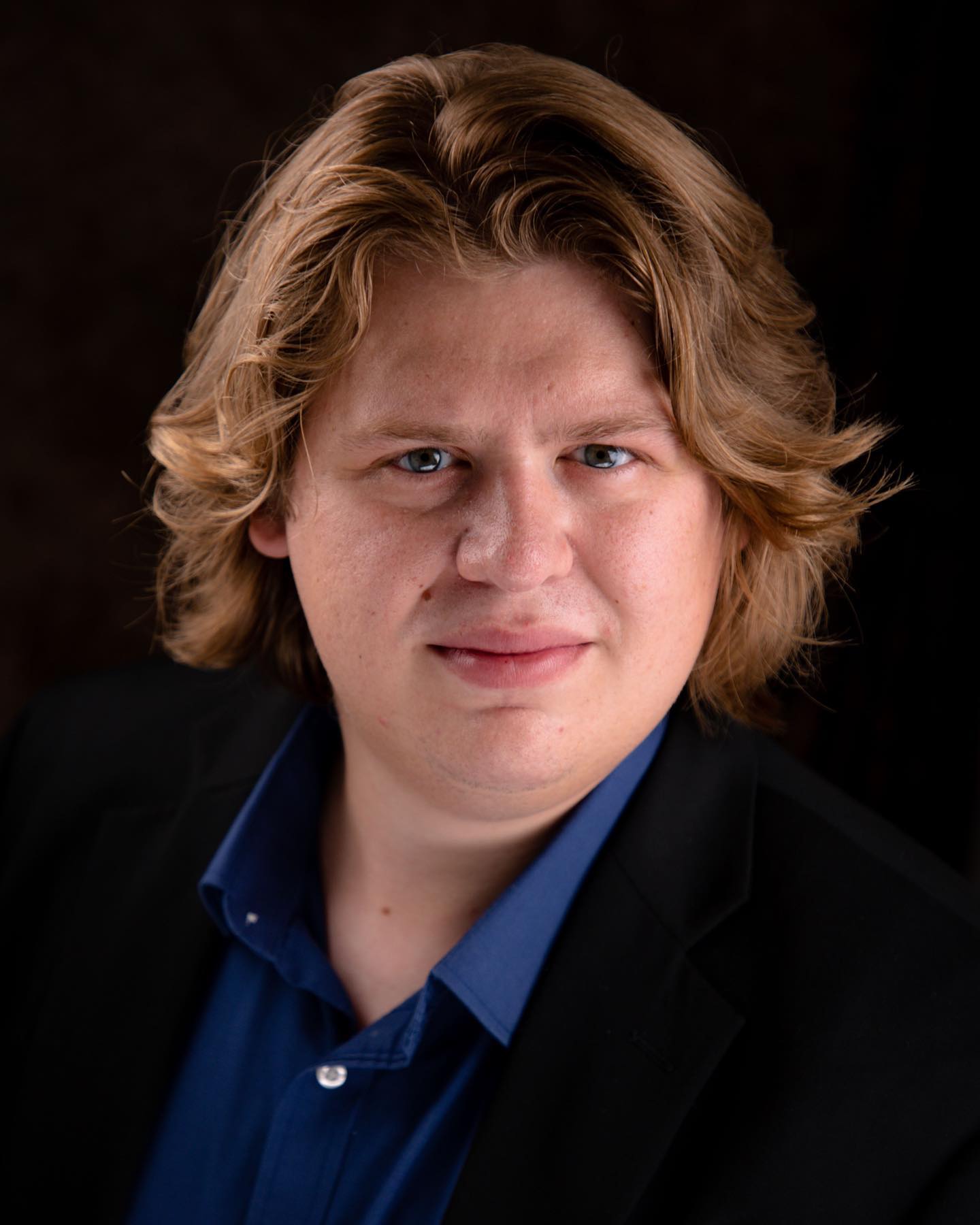
Christian Holden
Christian Holden, tenor, is thrilled to be singing again with Lyrical Opera Theater and is extremely grateful for the opportunity. Originally from Maple Valley, Washington, he has studied voice for over 11 years in both Idaho and Utah, currently training with Christopher Holmes at Utah Valley University. He has participated in many scenes shows, performing roles spanning from Canio in Pagliacci to Hoffmann in Tales of Hoffmann to Don José in Carmen. However, this is his first opportunity to study a role in full, and he is excited to test his vocal mettle as Otello. He will also perform Hoffmann in full later this year with the UVU opera program.
Otello, a Moorish general
Layton Loucks
Originally from Morgan, Utah, Layton Loucks is a senior majoring in vocal performance at Utah State University where he studies under Grammy Award winning Tenor, Thomas Glenn. In his time at Utah State, Layton has had the opportunity to perform a variety of opera roles including the role of The Rabbi in the world premiere of Lori Laitman's newest opera, Uncovered. Most recently Layton has performed the title role in Utah Vocal Arts Academy's production of Puccini's Gianni Schicchi last summer as well as the role of Valens in the USU opera production of Handel's Theodora in January.
Desdemona, Otello's wife
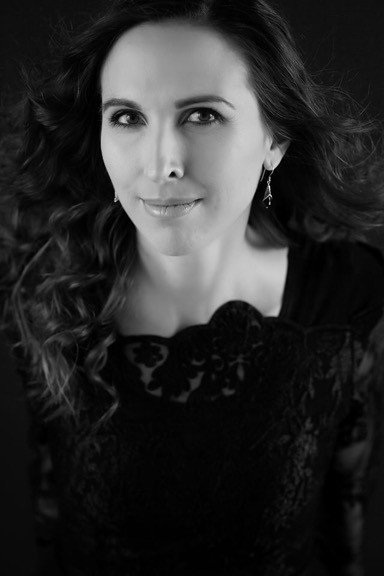
Chelsea Alexandia
Chelsea Alexandra is a Utah-based soprano who is so excited to return to Lyrical Opera Theater with the role of Desdemona in Verdi's Otello! Her most recent roles have been with Opera Contempo, as Hera in the world premier of the contemporary opera, Protectress, and the hilarious role of Billie Jo Casta in Oedipus Tex. Summer 2025 she was in Washington D.C., where she debuted as Juliette in Gounod's Roméo et Juliette with Shakespeare Opera Theatre. She has been with Lyrical Opera Theater twice before when she sang Micaëla in Bizet's Carmen, and as Mimì in Puccini's La Bohème, a role she later revisited in Novafeltria, Italy. Previous operatic engagements include the lead roles of The Mother (Ahmal and the Night Visitors), Cendrillon (Cendrillon), Lauretta (Gianni Schicchi) and Fiordiligi (Cosi fan tutte). Outside of performing, Chelsea loves to scuba dive and is passionate about empowering women through holistic approaches to health and healing.
Desdemona, Otello's wife
Kahli Dalbow
Kahli Dalbow is a lyric coloratura soprano and native of Pittsburgh, PA. She made her operatic debut in the role of The First Spirit in the Pittsburgh Opera's production of Mozart's The Magic Flute at the age of 15. Ms. Dalbow received her BFA in Vocal Performance from Carnegie Mellon University, and her MM in Vocal Performance from the University of Utah. Most recently, she was seen as Flora in Lyrical Opera Theater's production of La Traviata. Some of her favorite performed roles include Mabel in The Pirates of Penzance, Gianetta in L'Elisir d'Amore, and The Vixen in The Cunning Little Vixen. Kahli loves helping others find their voice and enjoys teaching many voice students at her home studio in Draper.
Iago, Otello's ensign
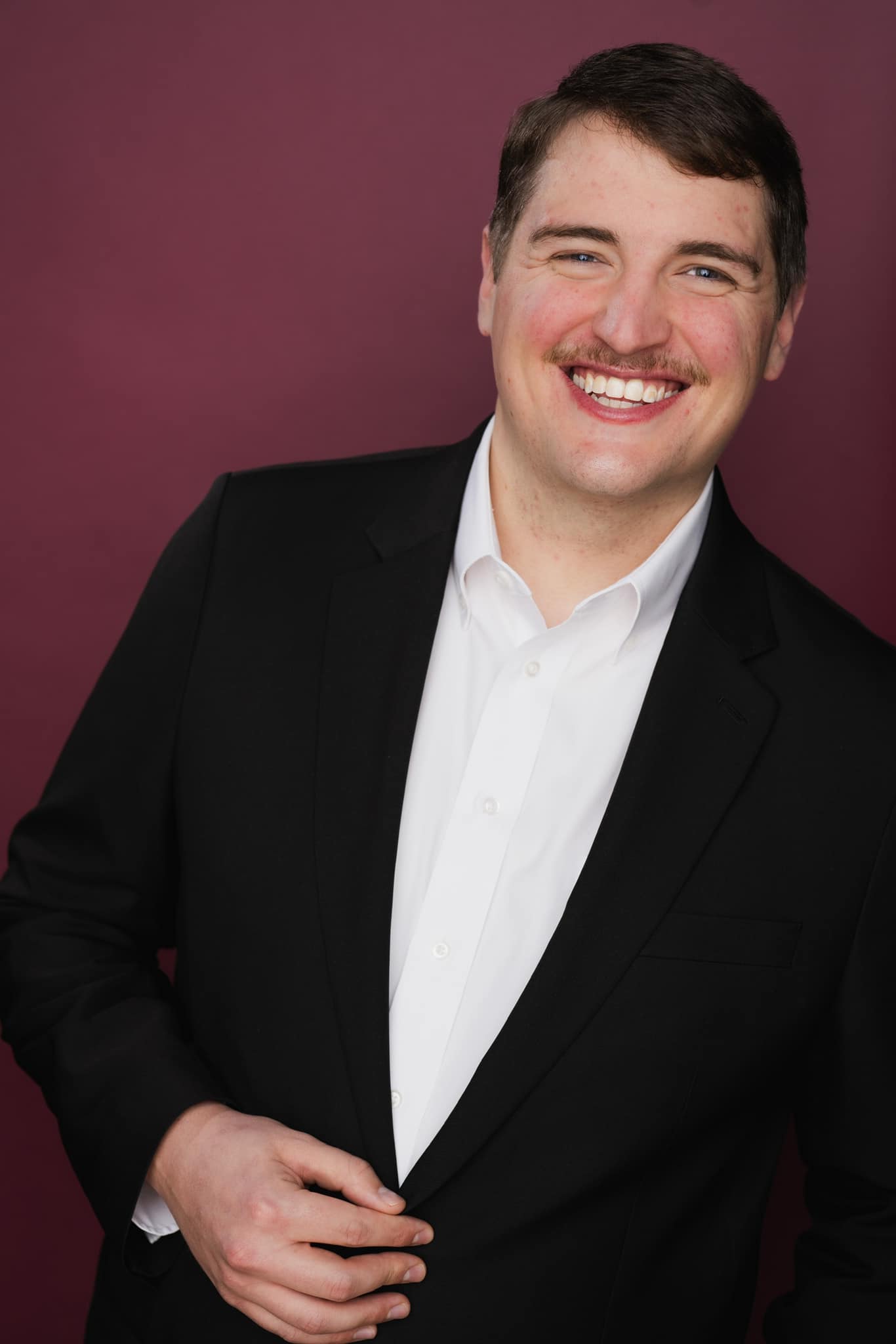
Hayden Höglund
Hailed as having a voice "like triple-chocolate brownie batter: rich and easy," and as being a "truly… talented musician and performer," Hayden Höglund is excited to be a part of Die Zauberflöte. Höglund has been seen in many roles locally, including Falke in Die Fledermaus, Pirelli in Sweeney Todd, Gaston in Beauty and the Beast, Mr. Sowerberry in Oliver!, and Betto di Signa in Gianni Schicchi; however, he's particularly excited to be singing the role of Sarastro, as it would have been his first role in an opera- if the Plague hadn't come along to cancel it. Höglund's favorite turn-of-the-twentieth-century operatic tenors are Joseph Schmidt, John McCormack, and Francesco Tamagno (in that order (although Lauri-Volpi is a close fourth).
Iago, Otello's ensign
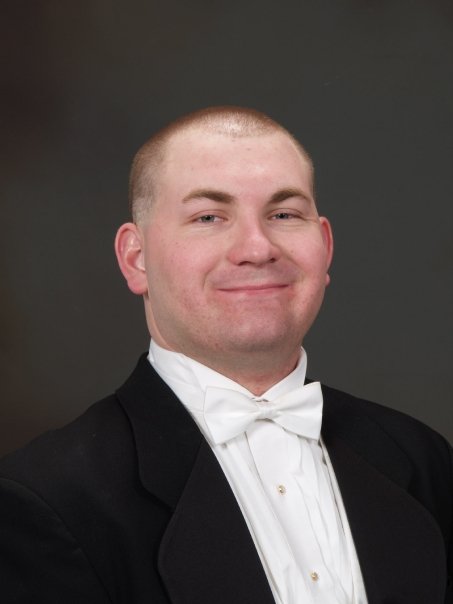
Marc Abbott
MARC ABBOTT, baritone, studied under tenor Harry Dunstan of the American Center for Puccini Studies, singing Pictordu (Cendrillon, Viardot), Guglielmo Wulf (Le Villi), Michele (Il tabarro), Scarpia (Tosca), Herr Colas (Bastien und Bastienne), and scenes as Count Almaviva (Le nozze di Figaro). More recently, he has sung the Notary/Doctor (Gianni Schicchi), performed in the ensemble in Utah Festival Opera's "Carmen", and Schaunard (La bohème) with Lyrical Opera Theater. He currently teaches voice at Utah State University and in his private studio in Cache Valley with his wife, Jacquelyn, who is performing Frasquita in this production.
Emilia, wife of Iago and maid of Desdemona
Katie Mansfield
bio coming soon
Emilia, wife of Iago and maid of Desdemona
Holly Banfield-Murray
Holly Banfield is currently studying for her DMA in vocal performance at the University of Utah where she was recently cast as Mrs. Lovett for their April 2022 production of Sweeney Todd. This summer, she performed with the La Musica Lirica program in Baraboo, Wisconsin as the Principessa in Suor Angelica and Tisbe in Cenerentola. Earlier in 2021, she was assistant director for the University's production of Rigoletto, in which she also appeared in the role of Maddelena. She has portrayed the Mother in Amahl and the Night Visitors, the Komponist in Ariadne auf Naxos, Orlofsky in Die Fledermaus, Zita in Gianni Schicchi, and Juno in Semele. She is thrilled to be on stage with Modesto Opera as Papagena for their production of The Magic Flute.
Cassio, Otello's captain
Sam Plumb
Sam Plumb is excited to be performing for the first time with Lyrical Opera Theater. In May 2025 he earned his Master of Music Degree in Vocal Performance and Pedagogy from the University of Utah. His Summer 2025 performing season was spent as a Resident Artist at Teatro Nuovo, an opera company based in NJ
that focuses on period-accurate presentations of the classic Bel Canto repertoire. When he's not singing opera, Sam enjoys video games, playing piano, reading
poetry, studying Italian, and camping. He has taught private voice/piano lessons for 3+ years, which is his dream career! Instagram: @ samplumbtenor.
Cassio, Otello's captain
Jesse Toftum
Jesse Toftum is a vocalist, multi-instrumentalist, theorist, and composer. He earned a Bachelor's Degree in Computer Science from the University of Utah, blending his passion for music with a strong foundation in technology. His academic journey also includes four years of studying music composition at Snow College, where he discovered his enduring love for opera. Jesse has performed as the Duke in Rigoletto, Remendado in Carmen, and Marchese d'Obigny in La Traviata for Lyrical Opera Theater in addition to contributions to chorus.
Rodrigo, a gentleman of Venice
Court Thomas
Court Thomas, is very excited to be part of this production of The Magic Flute, returning to his first ever operatic role of Monostatos. He wishes to thank the Lyrical Opera Theater for this incredible opportunity. Originally hailing from Northern Virginia, he has recently completed a Masters Degree in Music from the University of Utah, where he also got his Bachelors Degree. He made his operatic debut there as Monostatos in Mozart's Die Zauberflöte. From there, he has performed works by Verdi, Mozart, Rossini, Bizet, Menotti and Sondheim, among others. Court has been privileged to work with some incredible people, including his teacher, Kirstin Chavez, David Cangelosi, Dr. Robert Breault and many others besides. He is so grateful for all their guidance and care as he's progressed these past years. Above all, he is most grateful to his wonderful partner Zac and his amazing family and friends for their love and belief in him his whole life and their constant encouragement as he pursues his dreams.
Lodovico, Montano & Araldo
Matthew Castleton
Matthew Thomas Castleton (Salt Lake City, Utah) is delighted to appear in LOT's new production of Falstaff. Mr. Castleton has a large swath of operatic experience, including several roles with Lyrical Opera Theater: Dancairo/Morales in Carmen (2024), Colline in La Boheme (2023), Tonio in Pagliacci (2023), and Enrico in Lucia di Lammermoor (2022). Mr. Castleton also appeared in Emmanuel Chabrier's L'Étoile (Vegas City Opera 2017). Mr. Castleton was a young artist at the 2009 La Musica Lirica Opera Young Artist Program (Novafeltria, Italy). He holds both Bachelors (2010) and Masters (2014) Degrees in Music-Vocal Performance from the University of Utah. When he is not performing, Matthew also works as a Order Fulfillment Associate at Lowe's while making his home in Midvale, Utah.
Chorus
Kristi Hansen
Kristi has a great love of many types of music. As a nurse, she understands how operatic singing stimulates the vagus nerve, promoting positive health effects such as pain management, cardiovascular health, and reduced stress. This is her first appearance in a Lyrical Opera Theater production, and she is very excited to share the stage with such talented performers.
Chorus
Sarah Seamons
Sarah Seamons, a native of Ogden, Utah, developed her passion for music and performance through community theater and participation in university choirs. She has performed with the Utah Oratorio Society and currently studies under Lynnette Owens. Sarah's operatic roles include Giovanna in Rigoletto and covering the role of Suzuki in Lyrical Opera Theater's production of Madama Butterfly. She has appeared as a soloist at Lyrical Opera Theater's 2019 Masquerade Party and at Salt Lake City's Festa Italiana. Sarah has also performed in the ensembles of La Traviata, Falstaff, Carmen, and Die Fledermaus with Lyrical Opera Theater.
Chorus
Jacquelyn Abbott
DR. JACQUELYN ABBOTT, soprano, has loved singing from a very young age and began her vocal training not far from here in Kaysville, Utah. After obtaining an undergraduate degree in Communication Disorders from BYU, she felt singing was her true calling and went on to receive a Doctor of Music in Voice Performance with distinction from the Jacobs School of Music at Indiana University. Jacquelyn enjoys teaching at Utah State and maintains a private studio with her husband, Marc Abbott. She loves to perform and direct as often as she can and recently appeared as Rosalinda in Die Fledermaus and Phoebe in A Gentleman's Guide to Love and Murder.
Stage Manager
Trent Hall
bio coming soon
Assistant Stage Manager
Doug Hendriksen
Bio coming soon.
Producer
Lyrical Opera Products, Inc.
Lyrical Opera Products, Inc. creates high-quality orchestral accompaniment tracks for entire operas, arias, and ensembles—available with or without chorus—under its D.B.A., Classical Karaoke. These tracks allow singers to rehearse or perform with the richness of a full orchestra anytime, anywhere, without the high cost. Used worldwide via YouTube, the tracks bring professional-level support to soloists, companies, and educators. In addition, Lyrical Opera Products offers stage directions, projection scenery, costumes, and scenic elements for full opera productions, helping make opera more accessible and affordable for everyone.
🎭 An Insider's Guide for Otello
Verdi's Powerful Masterpiece
Premiered: 1887 Composer: Giuseppe Verdi Librettist: Arrigo Boito
Otello stands among Giuseppe Verdi's greatest achievements and is widely regarded as one of the finest operas ever written. Premiering in 1887, it was based on William Shakespeare's powerful tragedy Othello. After a sixteen-year absence from opera composition following Aida, Verdi returned with a work of astonishing dramatic intensity, creating a gripping psychological portrait of love, jealousy, manipulation, and betrayal.
⚔️ A Story of Love, Trust, and Destructive Jealousy
The opera follows Otello, the celebrated Moorish general of Venice, who returns victorious from battle to the island of Cyprus with his devoted wife, Desdemona. Their happiness is shattered by the schemes of Otello's ensign, Iago, whose resentment and ambition drive him to plant seeds of suspicion in Otello's mind. Through deception and carefully crafted lies, Iago manipulates Otello into believing that Desdemona has been unfaithful.
As doubt replaces trust, Otello descends into jealousy and despair, setting into motion a devastating chain of events that none can escape. At its heart, Otello asks timeless questions: How easily can trust be destroyed? What happens when fear overcomes reason? And how can unchecked jealousy transform love into tragedy?
🎵 Character Guide: Voices of Power and Passion
Character
Voice Type
Role Highlights
Otello
Tenor
Heroic, commanding, and deeply vulnerable; one of opera's most demanding dramatic tenor roles
Desdemona
Soprano
Compassionate and steadfast; a symbol of innocence, grace, and unwavering love
Iago
Baritone
Calculating and manipulative; one of opera's most chilling villains
Desdemona's devoted attendant whose courage ultimately reveals the truth
✨ Why Otello Stands Out
Shakespeare Meets Verdi: Verdi and librettist Arrigo Boito transformed one of Shakespeare's greatest tragedies into a tightly focused operatic masterpiece.
A Psychological Thriller: Rather than relying on external spectacle alone, the drama unfolds through the gradual unraveling of Otello's mind and emotions.
No Traditional Overture: The opera launches immediately into a terrifying storm, immersing audiences in the action from the very first notes.
Complex Characters: Even its heroes and villains possess remarkable depth, making their choices both human and heartbreaking.
🎶 Music That Captures the Human Soul
Verdi's score for Otello is among his most sophisticated and dramatically unified. The opera opens with a thrilling storm scene that sweeps audiences directly into the turmoil of the story. Otello's triumphant cry of "Esultate!" ("Rejoice!") announces the victorious general's arrival, while the tender Act I love duet, "Già nella notte densa" ("Already in the dark night"), reveals the deep affection between Otello and Desdemona.
Iago's chilling "Credo in un Dio crudel" ("I believe in a cruel God") offers a glimpse into the villain's cynical worldview, while Desdemona's haunting "Willow Song" and radiant "Ave Maria" rank among the most moving moments in all of opera. The music follows the emotional arc of the characters with extraordinary precision, carrying audiences from triumph and tenderness to suspicion, anguish, and ultimately devastating tragedy.
🎭 Shakespeare and Verdi: A Powerful Partnership
Although Verdi admired Shakespeare throughout his life, Otello marked one of his most successful adaptations of the playwright's work. Working closely with librettist Arrigo Boito, Verdi condensed Shakespeare's expansive drama into a lean, fast-moving opera that heightens the emotional intensity while preserving the essence of the original play.
The result is a work that feels remarkably modern in its exploration of manipulation, insecurity, prejudice, and the fragility of human trust.
🌟 Did You Know?
Verdi's Triumphant Return: After composing Aida in 1871, many believed Verdi had retired from opera. Otello marked his spectacular return sixteen years later.
A Different Beginning: Shakespeare's play opens in Venice, but Verdi and Boito begin directly in Cyprus during the famous storm scene, plunging audiences immediately into the drama.
No "Numbers" Opera: Unlike many earlier operas built from separate arias and ensembles, Otello flows almost continuously, creating a cinematic sense of momentum.
The Handkerchief Matters: A simple embroidered handkerchief becomes the crucial piece of "evidence" upon which the entire tragedy turns.
Verdi's Final Tragedy:Otello was the composer's final tragic opera, followed only by his comedic masterpiece, Falstaff.
🎉 Thank You for Joining Us
Lyrical Opera Theater proudly presents Otello—a masterpiece of dramatic storytelling that explores both the noblest and darkest corners of the human heart.
Whether this is your first opera or your fiftieth, may Verdi's unforgettable music and Shakespeare's timeless insight inspire reflection on the importance of trust, the dangers of unchecked jealousy, and the enduring power of truth and love.
The action takes place on the island of Cyprus during the late fifteenth century. Following a military victory, the celebrated Venetian general Otello returns home to his devoted wife, Desdemona. But beneath the appearance of honor and triumph, jealousy and deceit begin to unravel lives once bound together by love and trust.
Act I
Act 1 – The harbor at Cyprus: A violent storm rages as the people of Cyprus anxiously await the return of Otello's fleet. Otello arrives victorious, having defeated the Turkish forces, and is greeted with celebration. Secretly resentful after being passed over for promotion, Otello's ensign, Iago, begins plotting revenge by manipulating the honorable Cassio and provoking a drunken brawl that destroys Cassio's reputation. Later that evening, Otello and Desdemona share a tender moment alone, recalling how their love first blossomed and affirming their devotion to one another.
Act II
Act 2 – Outside the castle: Determined to bring about Otello's downfall, Iago advises Cassio to seek Desdemona's help in restoring his position. He then carefully plants seeds of suspicion in Otello's mind, suggesting that Cassio and Desdemona are involved in a secret affair. Though Otello initially resists these accusations, Iago's insinuations gradually awaken doubt and jealousy. By the end of the act, Otello demands proof of Desdemona's supposed betrayal and swears vengeance alongside Iago.
Act III
Act 3 – The great hall of the castle: As Desdemona innocently pleads on Cassio's behalf, Otello interprets her compassion as evidence of infidelity. Iago produces what appears to be convincing proof by arranging for Otello to witness an apparently compromising conversation involving Cassio. Consumed by jealousy and unable to distinguish truth from deception, Otello publicly humiliates Desdemona before visiting dignitaries from Venice. The once noble general becomes increasingly isolated and tormented by suspicion.
Act IV
Act 4 – Desdemona's chamber: Preparing for bed, Desdemona senses an approaching tragedy. She sings the melancholy "Willow Song" and offers a heartfelt prayer in her "Ave Maria." Otello enters, convinced that justice demands Desdemona's death. Despite her pleas of innocence, he cannot overcome the lies that have poisoned his heart. Emilia soon exposes Iago's treachery and reveals the truth behind the deception. Realizing too late the terrible consequences of his jealousy, Otello is overcome with grief and despair. After bidding a final farewell to Desdemona, he takes his own life beside the woman he loved.
Conclusion
Otello is a powerful exploration of the fragility of trust and the devastating consequences of manipulation and unchecked jealousy. Through Verdi's intensely dramatic music and Shakespeare's timeless storytelling, audiences are reminded of the importance of truth, compassion, and the courage to resist fear and suspicion.
About
Otello was composed by Giuseppe Verdi and premiered in 1887, with a libretto by Arrigo Boito based on William Shakespeare's tragedy Othello. Written after a sixteen-year hiatus from opera composition, it marked Verdi's triumphant return to the stage and showcased a remarkable evolution in his dramatic and musical style. Its seamless structure, psychological depth, and emotionally charged score have established Otello as one of the greatest masterpieces in the operatic repertoire.
Rigoletto by Verdi
Travel back in time…to the 1500's in Mantua, Italy for a tale about a sharp-tongued jester as he goes too far turning comedy into tragedy, an adventurous duke's sordid love affairs, pranks gone wrong and curses lurking in the shadows.
We exist because of the thousands of hours of volunteer efforts, the gifts differently abled individuals bring to us and to the often overlooked, undervalued and undercompensated contributions of every kind. Therefore, out of respect for all donors, they are not categorized or distinquished differently.